
COLUMN
THE SKILL OF A MASTER
CRAFTSMAN.
How to Identify High-Quality Matcha: Color, Aroma, and Taste
2026.07.15
At first glance, all matcha may appear to be little more than a fine green powder.
In reality, however, significant differences in quality exist depending on cultivation methods, raw materials, and production techniques. These differences ultimately influence not only the character of the tea itself, but also the applications for which it is best suited.
When selecting matcha, price and branding can provide some guidance, but they are not the whole story.
Developing the ability to evaluate matcha through your own senses is equally important.
In this column, we would like to explore three fundamental indicators of matcha quality: color, aroma, and taste.
Color: The First Indicator of Freshness and Cultivation Quality
High-quality matcha is distinguished by a vibrant, vivid green appearance.
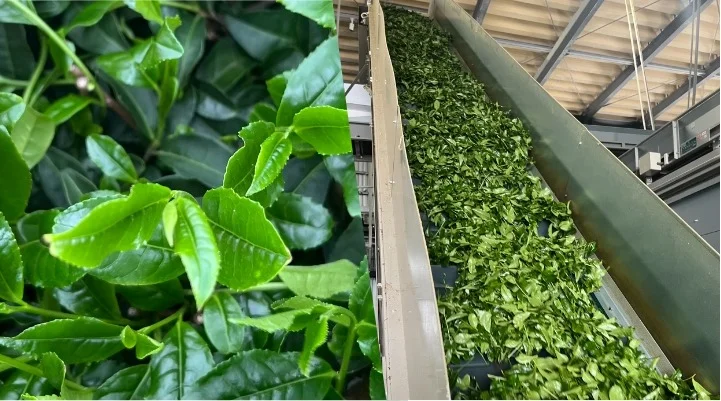
This characteristic is largely the result of shading cultivation (ooishita saibai), a technique in which tea plants are protected from direct sunlight prior to harvest. By limiting exposure to sunlight, chlorophyll levels are preserved, producing the rich green color associated with premium matcha.
Characteristics of quality matcha include:
・Bright, deep green color
・Uniform appearance without dullness or discoloration
・A clean and lively visual impression
Signs that may indicate lower quality or deterioration include:
・Yellowish, brownish, or olive-toned hues
・Visible dullness caused by oxidation or inferior raw materials
Particle size also plays an important role.
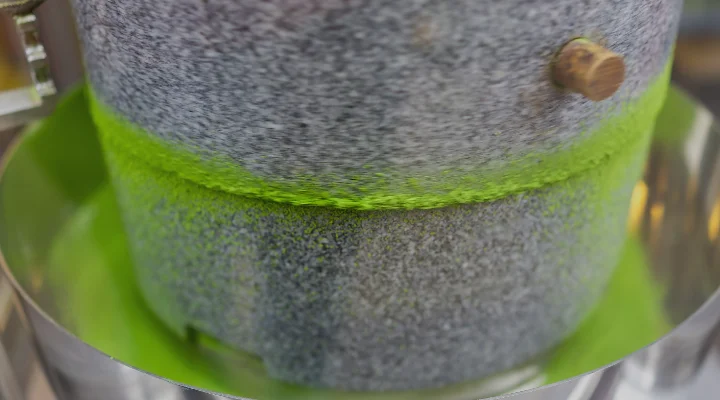
Traditionally stone-ground matcha is typically milled to an average particle size of approximately five microns. The resulting powder is exceptionally fine and uniform, often displaying a subtle sheen that reflects careful craftsmanship.
Even before preparation, the appearance of the powder can reveal a great deal about its quality.
Aroma: Where Quality Differences Become Most Apparent
Among all evaluation criteria, aroma is often one of the most revealing.
Well-crafted matcha offers more than a simple grassy scent. It presents a layered fragrance that combines freshness, sweetness, and umami.
Characteristics of a desirable aroma include:
・Fresh notes reminiscent of young leaves
・Natural sweetness
・A seaweed-like umami fragrance often referred to as oi-ka (“covered aroma”)
Aromas that may suggest quality concerns include:
・Excessive grassiness
・Dusty or stale impressions
・Burnt or otherwise unnatural notes
This distinctive sweet and gentle fragrance develops through proper shading cultivation and careful processing.
When the aroma feels weak, flat, or accompanied by off-notes, it may indicate issues related to raw materials, manufacturing methods, or storage conditions.
Taste: Evaluating Balance Rather Than Bitterness
When assessing matcha, the most important factor is not the intensity of bitterness, but the balance between its various flavor components.
The taste of matcha is primarily composed of:
・Umami (amino acids such as theanine)
・Natural sweetness
・Astringency and bitterness (derived from catechins and caffeine)
In high-quality matcha, these elements exist in harmony, creating a smooth, layered, and refined flavor profile.
Characteristics of a desirable taste include:
・Rich umami accompanied by gentle sweetness
・Soft, integrated bitterness
・A clean and pleasant finish
Characteristics that may indicate lower quality include:
・Overwhelming bitterness or astringency
・A one-dimensional flavor profile
・Persistent harshness in the aftertaste
Ceremonial-grade matcha, in particular, is valued for its low astringency and exceptionally smooth mouthfeel, allowing its natural sweetness and umami to emerge clearly.
The Intended Use Is the Final Consideration
Perhaps the most important point is that“good” does not necessarily mean “expensive.”
The ideal matcha depends on its intended purpose.
For tea ceremony and straight drinking
→ Prioritize sweetness, umami, and delicacy
→ Ceremonial Grade
For lattes, confectionery, and food applications
→ Prioritize strength, bitterness, and flavor retention when blended with other ingredients
→ Culinary Grade
Because matcha is designed for different purposes, evaluations of color, aroma, and taste should never be made in isolation. They should always be considered in relation to how the matcha will ultimately be used.
Closing Thoughts
The fundamentals of identifying quality matcha are surprisingly simple.
・Color: Is it vibrant and free from dullness?
・Aroma: Does it offer a natural freshness accompanied by sweetness?
・Taste: Is there harmony between umami, sweetness, and bitterness?
The ability to recognize quality develops through experience and repeated evaluation.
By consistently observing these three elements, one can gradually cultivate a deeper understanding of matcha and make more informed selections for every purpose.