
COLUMN
THE SKILL OF A MASTER
CRAFTSMAN.
How Matcha Is Made
2026.08.17
Matcha is known for its vibrant green color, rich umami flavor, and smooth mouthfeel.
These qualities do not happen by chance. They are the result of carefully managed cultivation methods and skilled craftsmanship throughout every stage of production. In this article, we explore the journey of matcha, from tea field to stone mill.
Matcha Production Begins with Shade-Grown Cultivation
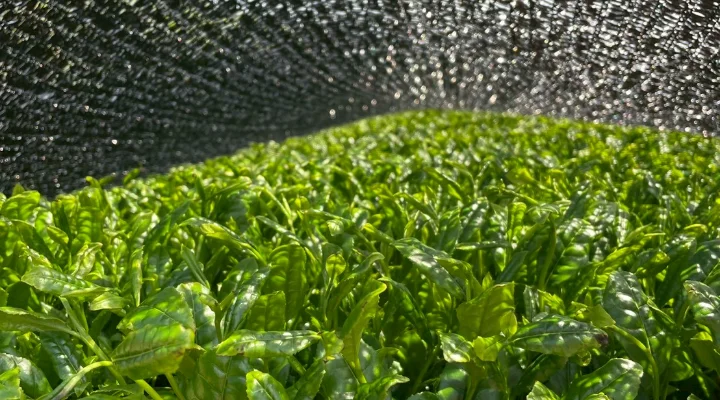
The tea leaves used for matcha are grown under shade for approximately 20 to 30 days before harvest.
By limiting direct sunlight, the tea plants retain higher levels of the amino acid theanine, while the production of compounds responsible for bitterness and astringency is reduced. As a result, matcha develops its characteristic sweetness, rich umami, and vivid green color.
This shading process is considered one of the most important factors influencing the final quality of matcha.
Carefully Harvesting Young Tea Leaves
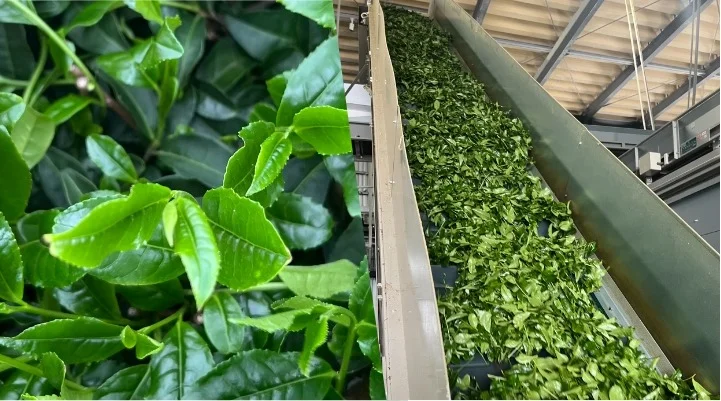
After the shading period, the tea leaves are harvested during the spring season.
For premium-grade matcha, producers select only the youngest and most tender leaves from the first harvest. These young leaves contain high levels of theanine and relatively low levels of bitter compounds, creating a smooth, refined flavor with remarkable depth.
To preserve freshness, the harvested leaves are quickly transported for processing. High-quality matcha begins with this careful selection of raw materials.
The Raw Materials Behind Different Grades
The grade of matcha is largely determined by the type of tea leaves used and the cultivation methods employed.
Premium grades are typically made from young first-harvest leaves grown under longer shading periods. This results in a brighter green color, greater sweetness, and a richer umami profile.
Mid-grade and entry-level matcha, on the other hand, may incorporate more mature leaves or leaves from later harvests. These leaves tend to contain higher levels of catechins, producing a stronger bitterness and a more robust matcha flavor.
From a health-conscious perspective, this higher catechin content can also be an advantage. Catechins are naturally occurring compounds found in green tea and have attracted attention for their antioxidant properties and their potential role in supporting cardiovascular health.
The value of matcha is therefore not determined by price alone. Understanding the characteristics created by different tea leaves and cultivation practices is essential when selecting the right matcha for a specific purpose.
Processing Leaves into Tencha
After harvesting, the leaves are steamed to prevent oxidation and then dried.
Unlike sencha, which is rolled during processing, matcha leaves are dried without rolling in order to preserve their original shape. The resulting product is known as tencha, the raw material used to make matcha.
The stems and veins are then carefully removed, leaving only the most suitable leaf material. This refinement process helps create the clean, smooth flavor associated with high-quality matcha.
Grinding Matcha with Traditional Stone Mills
The final stage of production is grinding the tencha into a fine powder.
Traditional stone mills slowly grind the leaves into extremely fine particles. Although this method is not suited to mass production, it minimizes frictional heat, helping preserve the tea's color, aroma, and flavor.
The result is a uniform powder that contributes to matcha's smooth texture and elegant aroma.
Today, mechanical mills are also widely used in matcha production. However, stone-milled and machine-milled matcha differ in particle characteristics and flavor expression.
For a deeper look at the differences between stone milling and mechanical milling, please read our related article: "Why Is Japanese Matcha Valued Around the World?"
https://www.takumijpn.jp/jp/column/5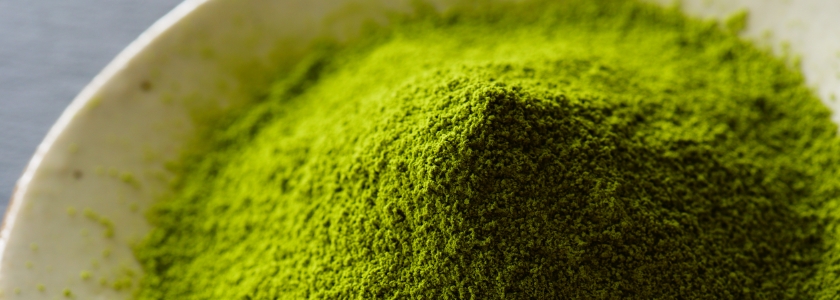
The Craftsmanship Behind Every Bowl of Matcha
From shaded cultivation and harvesting to tencha processing and stone milling, matcha is created through a series of carefully managed steps and the dedication of skilled producers.
Its vibrant color and rich umami are not the result of any single process. Rather, they reflect the accumulated expertise and attention to detail applied at every stage of production. These techniques represent a living tradition passed down through generations of Japanese tea artisans.
When choosing matcha, it is worth looking beyond flavor and aroma to understand the production process behind it.
As global demand for matcha continues to grow, grade and price alone are no longer enough to evaluate quality. Understanding how matcha is produced is becoming an essential step in identifying truly exceptional products.