
COLUMN
THE SKILL OF A MASTER
CRAFTSMAN.
How to Choose Commercial Matcha: A Guide for Restaurant Owners
2026.11.16
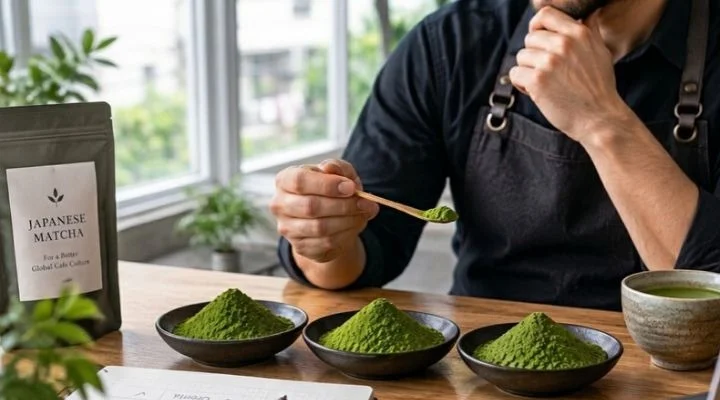
In recent years, matcha-based menu items, including matcha lattes and matcha desserts, have become increasingly popular in cafés and restaurants around the world. Japanese matcha is gaining attention from café owners and foodservice businesses overseas as a versatile ingredient that can be used in a wide range of products, from beverages to desserts.
However, when sourcing commercial matcha from Japan, many buyers may find themselves unsure of which criteria to use when selecting the right product.
Choosing commercial matcha requires more than simply considering quality factors such as taste and aroma. It is also important to take into account your store concept, menu pricing, required order quantities, and shipping methods.
In this article, we introduce the key points that overseas cafés and restaurants should consider when sourcing commercial-grade Japanese matcha.
First, Determine How You Plan to Use Matcha
The first thing to consider when choosing commercial matcha is what types of menu items you intend to use it for.
For example, matcha lattes and baked goods require different flavor profiles, colors, and characteristics from the matcha itself. Even among beverages, the ideal type and quantity of matcha may vary depending on the menu item, whether it is a matcha latte, matcha smoothie, or seasonal specialty drink.
Before introducing matcha to your menu, it is helpful to identify your intended applications, such as:
Beverages (matcha lattes, smoothies, etc.)
Desserts and baked goods (cakes, cookies, etc.)
Soft serve ice cream and gelato
Toppings and garnishes
Seasonal menu items
Clarifying your intended applications makes it easier to identify the quality requirements and quantities you need. It also helps streamline the product selection process when considering sourcing from Japan.
Consider Menu Pricing and Food Cost
For cafés and restaurants overseas to offer matcha-based menu items on an ongoing basis, profitability must be considered alongside quality.
For example, when calculating the cost of a matcha latte, the total ingredient cost includes not only the matcha itself but also milk, sweeteners, cups, and other supplies.
When importing matcha from Japan, additional expenses such as international shipping, customs duties, and other import-related costs must also be taken into account.
Therefore, when selecting commercial matcha, it is important not to judge a product solely by its purchase price. Instead, consider the following factors:
Amount of matcha used per serving
Expected selling price
Total cost per serving
International shipping and import-related expenses
Target food cost percentage
The key is to find a balance between quality and cost that suits your store concept and menu pricing while allowing you to serve matcha-based items consistently and profitably.
Check Whether Small Orders Are Available
When introducing a new menu item, it can be difficult to accurately predict how much demand there will be.
This is especially true for businesses that are handling Japanese matcha for the first time. Rather than purchasing large quantities from the beginning, choosing a supplier that allows you to start with smaller orders can provide greater flexibility and peace of mind.
When evaluating potential suppliers, check whether they offer the following:
Product samples
Smaller package sizes
Support for product testing and menu development
International shipping
By testing the matcha in actual recipes, you can evaluate how well it works with your intended menu items, as well as the final taste, appearance, and preparation process.
This also makes it easier to determine whether the product is suitable for your store's operations before committing to larger-scale imports.
Choose a Supplier That Can Ensure a Stable Supply
When using matcha as a commercial ingredient, it is essential to ensure that you can obtain the quantities you need whenever you need them.
Even if a matcha-based menu item becomes popular after its launch, it will be difficult to continue offering it if you cannot secure a sufficient and consistent supply. In addition, variations in quality between orders may affect the taste and appearance of your menu items.
When sourcing Japanese matcha from overseas, it is important to check not only domestic stock availability in Japan but also the supplier's export capabilities and delivery lead times.
When choosing a supplier, consider the following points:
Commercial supply capabilities
Inventory management and delivery lead times
Quality control systems
International shipping capabilities
Potential for a long-term business relationship
The ability to maintain a stable supply over the long term is an important factor in consistently offering matcha-based menu items.
Support for Menu Development Is Also Important
When introducing matcha to your menu, questions often arise not only about product selection but also about how to develop and prepare actual menu items.
For example:
Which type of matcha is best suited to the menu items you have in mind?
How much matcha should be used per serving?
How well does it pair with other ingredients, such as milk and sugar?
Can consistent quality be maintained when serving matcha at overseas locations?
Working with a supplier who can address these questions can make the entire process smoother, from product selection and recipe testing to implementation and ongoing operations.
In addition to simply selling products, it is worth considering whether a supplier can offer product recommendations based on your intended applications, provide samples, and assist with menu development.
Three Key Factors to Consider When Choosing Commercial Matcha
Based on the points discussed above, there are three particularly important factors to balance when selecting commercial matcha.
1. Quality
The matcha should have the characteristics needed for the menu items you plan to offer. Choose a product that aligns with your store concept and brand image.
2. Cost
Your cost structure should support sustainable, long-term sales. In addition to the purchase price, consider international shipping, import-related expenses, and the amount of matcha used per serving.
3. Supply Capabilities
You should be able to consistently source the quantities you need. It is also essential to evaluate quality control, delivery schedules, and international shipping capabilities with a long-term business relationship in mind.
Considering the balance between these three factors will help your business offer matcha-based menu items consistently over the long term.
Conclusion
When sourcing commercial Japanese matcha, it is important to look beyond taste and aroma alone. Consider a range of factors, including intended applications, food cost, small-order availability, supply stability, international shipping, and support for menu development.
By choosing matcha that aligns with your menu and business concept, you can maintain product quality while achieving both customer satisfaction and sustainable business operations.
Japan is also home to a wide variety of tea cultivars, each with its own unique characteristics that influence the flavor and qualities of matcha. If you want to explore the appeal of Japanese matcha in greater depth, why not take a closer look at the different tea cultivars?