
COLUMN
THE SKILL OF A MASTER
CRAFTSMAN.
Why Does Matcha Vary So Much in Price?
2026.10.09
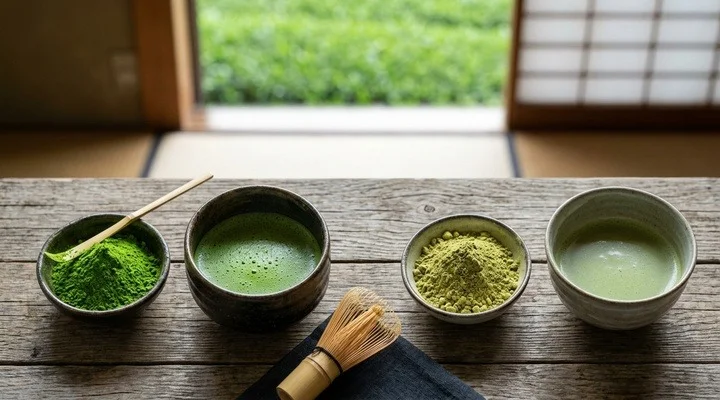
Have you ever looked for matcha and wondered, “Why are there such significant price differences between products that are all called matcha?”
Some products cost just a few hundred yen for several dozen grams, while others cost several thousand yen for the same amount. In particular, in the foodservice and international markets, matcha products are often compared based on price alone.
However, differences in matcha pricing reflect a variety of factors, including the quality and cultivar of the tea leaves used, cultivation methods, manufacturing processes, and quality control.
In this article, we explore the main factors that determine matcha prices and explain how these differences relate to matcha quality and suitability for different applications.
What Determines the Price of Matcha?
Several key factors influence the price of matcha, including:
The quality of tencha, the tea leaves used to produce matcha
Tea cultivars
Cultivation methods
Manufacturing processes
Quality control
Production volume and supply capacity
Matcha is more than simply powdered tea leaves. Its quality and value are shaped by a range of processes and techniques, from tea cultivation and processing to milling and quality control.
1. The Quality of the Tea Leaves
One of the most important factors affecting matcha quality is the quality of the tencha used as its raw material.
Matcha is not made by simply grinding freshly harvested tea leaves. In general, the leaves are steamed, dried, and sorted through several processing stages to produce tencha. The tencha is then finely milled to create matcha.
High-quality matcha is generally made from tencha with characteristics such as:
A vibrant green color
Rich umami
A smooth, mellow taste
A distinctive matcha aroma
The harvest season is another important consideration when evaluating the quality of matcha ingredients.
The Difference Between First and Second Harvest Tea
Tea leaves can be harvested multiple times throughout the year. The first harvest of the year is known as the first flush, while the subsequent harvest is commonly referred to as the second flush.
First-flush tea generally comes from young shoots that have accumulated nutrients during the winter months. As a result, it tends to offer a rich umami character and a well-developed aroma.
Second-flush tea has different flavor and compositional characteristics and is used in a variety of applications, including beverages and confectionery.
However, this does not mean that first-flush tea is always higher in quality or that second-flush tea is necessarily inferior. The final quality of matcha also depends on factors such as the cultivar, cultivation methods, shading practices, harvest timing, and manufacturing processes.
First-flush tea is harvested during a limited period, and demand for high-quality ingredients can be strong. These factors may affect both raw material availability and pricing.
Second-flush tea can also offer an effective balance between flavor, color, and cost when selected for the intended application.
Careful management of tea gardens and harvesting practices is essential to securing high-quality raw materials consistently. These factors—including raw material quality, harvest timing, supply volume, and the labor involved in production—all contribute to the value of matcha.
2. Differences Between Tea Cultivars
The cultivar used to produce matcha influences its taste, aroma, and color.
Some of the major tea cultivars grown in Japan include:
Yabukita
Okumidori
Samidori
Each cultivar has its own characteristics, and producers select them according to the desired color, flavor profile, and intended application.
Okumidori, in particular, is known for its vibrant green color and mellow taste. It is used in a wide range of applications, including traditional matcha preparation, matcha lattes, and confectionery.
However, depending on the growing region, harvest conditions, and other factors, securing a consistent supply of Okumidori in the required quantities can sometimes be challenging. Supply may also be limited by variations in quality and harvest yields, making it difficult to consistently source raw materials that meet specific requirements.
In this way, cultivar characteristics, cultivation volume, overall supply, and market availability can all influence matcha prices and procurement.
Even within the same cultivar, the final product can vary significantly depending on the growing environment, shading methods, harvest timing, and manufacturing processes.
For this reason, it is important not to judge quality or price based on the cultivar name alone. Understanding the raw materials used and how the matcha is produced is equally important.
3. The Costs of Shading Practices
During the cultivation of tencha, the tea gardens are typically covered to reduce exposure to direct sunlight before harvest. This practice is known as shading cultivation.
By controlling the amount of light the tea leaves receive, shading can contribute to characteristics such as:
A vibrant green color
Rich umami
The distinctive flavor profile of matcha
However, shading cultivation requires additional work, including preparing, installing, and maintaining the covering materials.
The methods and duration of shading vary depending on cultivation conditions, and the process involves additional labor and material costs.
These additional cultivation requirements are among the factors that contribute to differences in matcha prices.
4. Differences in Manufacturing Processes
Harvested tea leaves undergo several processing stages to become tencha, which is then milled into matcha.
The main stages include:
Steaming
Drying
Sorting
Milling
During matcha production, the tea leaves must be finely milled while preserving their color, aroma, and flavor as much as possible.
For matcha used as a commercial ingredient, several additional quality factors are important:
Consistency of particle size
Uniformity of color
Aroma and flavor
Consistency between production lots
Beverage and confectionery manufacturers need ingredients that deliver consistent results across repeated production runs.
As a result, the costs associated with manufacturing equipment, processing technology, and quality control are also reflected in matcha prices.
5. Quality Control and Supply Stability
For commercial and export-oriented matcha, quality control and a reliable supply system are just as important as taste and color.
Key considerations include:
Raw material management
Foreign matter prevention
Quality checks for each production lot
Storage condition management
A reliable and consistent supply system
These measures require time and investment, but they provide significant value for businesses that rely on matcha as a regular ingredient.
For cafés, beverage manufacturers, and food producers, matcha must not only taste good but also deliver consistent quality every time.
Therefore, when selecting commercial matcha, businesses should consider not only the unit price but also product consistency and the supplier’s ability to maintain a stable supply.
How Matcha Differs Across Price Ranges
Higher-priced matcha is not necessarily always better in quality, just as lower-priced matcha is not necessarily inferior.
Color, aroma, flavor, and suitability for different applications vary depending on the raw materials, cultivar, cultivation methods, and manufacturing processes.
In general, the following differences may be observed depending on the quality requirements and intended application.
Factor | Matcha Selected for Quality | Matcha Selected for Cost Efficiency |
|---|---|---|
Color | A vibrant green color is often a priority | Yellowish or dull tones may be present |
Aroma | A rich, distinctive aroma is often sought | The aroma may be more subtle |
Taste | A balanced profile of umami, sweetness, and bitterness is often preferred | Bitterness or astringency may be more pronounced |
Quality consistency | Quality control tailored to the intended application is important | Consistency varies depending on the product and quality management practices |
Suitability for product development | More options may be available to meet specific color and flavor requirements | Selection should be based on the intended application |
Of course, lower-cost matcha can also be well suited to applications such as beverages and confectionery.
The key is not to judge matcha by price alone, but to determine whether it meets the quality requirements of the intended application.
For example, in a matcha latte, the matcha's flavor and color should remain noticeable when combined with milk.
For confectionery, on the other hand, important considerations may include color and flavor retention after heating, as well as overall cost efficiency based on the amount of matcha required.
What Businesses Should Consider When Selecting Matcha
When selecting matcha for commercial use, businesses should evaluate several factors rather than focusing on price alone.
Cultivar
Color
Aroma and flavor
Suitability for the intended application
Quality consistency
Supply stability
For matcha lattes, for example, a strong flavor that holds up well against milk and an appealing green color are important.
For confectionery, color and flavor retention after heating are key considerations, along with cost efficiency based on the amount of matcha used.
Products intended for international markets may also need to meet specific quality standards, specifications, and other requirements that differ from those of the domestic Japanese market.
As the ideal matcha varies depending on its application, businesses should select products based on their final product concept and quality requirements rather than choosing solely because a product is inexpensive or positioned as premium.
Conclusion
Differences in matcha prices are not determined by brand or region of origin alone.
A variety of factors contribute to matcha quality and pricing, including:
The quality of the tencha used as raw material
Tea cultivars
Cultivation methods
Manufacturing processes
Quality control
Supply stability
For commercial applications and product development, it is important to evaluate not only price but also quality, consistency, suitability for the intended application, and supply reliability.
When choosing matcha, it is worth looking beyond the immediate price and asking two important questions:
“Why is this matcha priced this way?”
And:
“What value does it bring to our product?”
Considering these questions can help businesses make more informed decisions and select the matcha that best meets their needs.